


|
Division
|
Gymnosperms
|
|
Class
|
Coniferopsida |
|
Order |
Coniferales |
|
Family
|
Pinaceae |
|
Genus
|
Cedrus |
|
Species
|
deodara |
|
Etymology:
|
Cedron is a small river in Judaea the original home of Cedrus species and hence the Greek name ceadron. Cedrus is the latin name for Cedrus and it is commonly known as Cedars. |
|
Botanical name:
|
Cedrus deodara (Roxb.) G. Don |
|
Local/Trade Names: |
Himalayan Cedar, Deodar |
|
Conservation status:
|
Forms a forest type in Western Himalaya. |
|
Digonestic features:
|
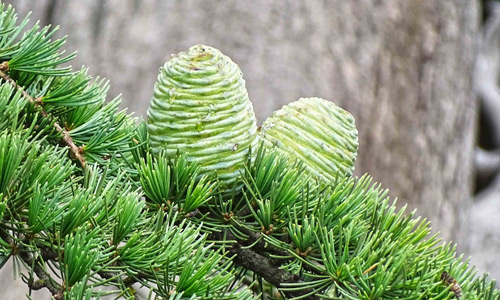
Leaves acicular (needle like). |
|
Description: |
An evergreen, robust tree, 20-30 m tall. Bark grayish, flaking off as oblong scales. Leaves acicular, 2.5-4 cm long, persistent, 3-sided, glaucous. Cones erect, barrel-shaped, 6-10 x 4-8 cm, subsessile, resinous. Seed 2 to each scales, triangular with a broad membranous apical wings. |
|
Distribution: |
Widely distributed in the Western Himalaya from Afghanistan to West Nepal. |
|
Where to see it: |
Pinetum |
|
Uses: |
Strongest of Indian coniferous woods, used for door and window frames, furniture packing-cases, beams, masts, spars and shingles, and also for bridges and railway sleepers. Wood yields an oleoresin and a dark coloured oil used for ulcers and skin diseases. Needles yield an essential oil. Wood considered diuretic, diaphoretic and carminative. Bark used in diarrhoea and dysentery. |

Chief Conservator of Forests & Chief Wildlife Warden is the Head of the Department. There is one post of Conservator of Forests & two posts of Deputy Conservator of Forests viz.