| Etymology: |
Derived from Malayalam and Tamil names of fruit (Mango, Mangai); Latin fero, to bear; referring to the plant bearing mango fruits. |
| Botanical name: |
Mangifera indica Linn. |
| Local/Trade Names: |
Mango, Aam |
| Conservation status: |
Found throughout India. |
| Digonestic features: |
Bark black or dark grey; flower with only perfect stamen. |
| Description: |
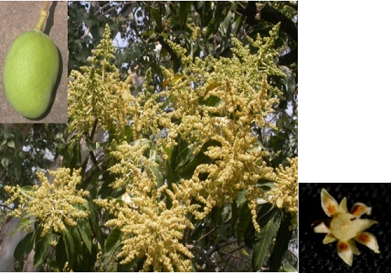
A medium to large evergreen tree. Bark dark grey, almost black. Leaves 15-30 x 4-10 cm, linear-oblong or elliptic-lanceolate, margin entire or wavy, secondary nerves 20-23 pairs. Flowers ca 3 mm across, yellowish-green, in panicles. Fruit a drupe, 5-15 cm long, ovoid; stone compressed, fibrous. |
| Phenology: |
Fls.: Feb.-Mar. Frts.: June-July. |
| Distribution: |
Subtropical Himalaya, Western and Eastern Ghats, Central India, Bihar, Orissa, Assam, planted almost throughout India. |
| Where to see it: |
Medicinal Plant Garden, Nutritive Garden, Along with Bulbous Garden, Gate No. 2 side, Nursery and by side of Polycarbonate House. |
| Uses: |
Fruits classed among the choicest fruits of the world; rich source of carotene, some varieties contain fairly good amounts of Vitamin C. Unripe fruits pickled, used for chutney, preparation of powder ( Amchur), and culinary preparations. Ripe fruits preserved by canning or used for juice squash, jams and jellies, preserves ( Murabba), mango leather ( Amsat or Am papar). Cotyledons used as food and feed in times of scarcity. Wood used for inferior furniture, floor and ceiling boards, window frames, tea-chests, packing-boxes, brush-backs and agricultural implements; also used for plywood and shoe-heels. After treatments, it can also be used for beams, rafters, trusses, and door and window shutters. Fruit laxative, diuretic. Bark used for uterine haemorrhage; seeds in asthma. |